


Industrial
Structural Steel in Malaysia: Grades, Types, Fabrication and Supplier Selection


Nov 2026


Key Takeaways
- Structural steel in Malaysia is specified predominantly to British and European Standards (BS EN), with S275 and S355 the grades most commonly used for general and high-load applications; ASTM and JIS grades are used where a specific project or client requires them.
- Steel portal frames deliver up to 7.5% lower total construction cost than concrete for industrial and logistics projects, with 14% lower embodied carbon (AECOM, Q4 2023).
- A certified steel structure supplier should hold current ISO 9001 and UKAS certification, plus a CIDB registration that covers the full fabrication and erection scope of works.
- Off-site fabrication runs in parallel with site groundworks, compressing the construction programme without reducing time allowed for individual stages.
- Verify a supplier's available production capacity against your programme before awarding a contract; a fabricator at full order book creates schedule risk from the moment of award.
In This Guide
- Steel Grades and Standards Used in Structural Construction in Malaysia
- Types of Steel Structures Used in Malaysia
- The Structural Steel Fabrication Process
- Quality Assurance: What a Certified Steel Fabricator Should Demonstrate
- Why Steel Structure Is More Cost-Effective Than Concrete
- How to Choose a Structural Steel Supplier in Malaysia
- Plan Your Structural Steel Project with SANKI-Kigyo
Malaysia's construction sector depends on structural steel across its most demanding project types, from industrial steel structures and logistics facilities to bridges, high-rise commercial frames, and power generation infrastructure. Steel consumption reached 7.9 million metric tonnes in 2023, a 4.5% increase for the third consecutive year, driven by construction and infrastructure demand (MIDA, 2024). This guide is a practical reference for project owners, engineers, and procurement leads evaluating steel structure suppliers in Malaysia for commercial, industrial, or civil projects.
Steel Grades and Standards Used in Structural Construction in Malaysia
Structural steel in Malaysia is specified predominantly to British Standards (BS) and European Standards (EN), which Malaysian Standard (MS) specifications for structural steel reference directly. S275 (yield strength 275 MPa) for general structural applications, and S355 (355 MPa) for higher-load applications. Weathering grades under the same standard are used where long-term atmospheric exposure resistance is required. Depending on the project's design consultant, main contractor, or client specification, steel to other international standards may also be called for. For example, ASTM grades such as A36 and A572 Grade 50 on projects specified to American design standards, or JIS grades such as SS400 and SM490 on projects with Japanese engineering involvement. The applicable standard and grade should always be confirmed against the project's design specification rather than assumed by default.
Grade selection determines a structure's load capacity, weldability, and long-term performance. S355 is generally preferred for higher-load applications such as industrial frames with heavy overhead crane systems, with equivalent higher-strength grades used where the project is specified to ASTM or JIS standards instead. Specifying the correct grade at the outset prevents over-engineering, which adds unnecessary cost, and under-specification, which creates structural risk.
Types of Steel Structures Used in Malaysia
Structural steel applies across several distinct building and infrastructure categories, each with specific load, span, and performance requirements.

Industrial Buildings
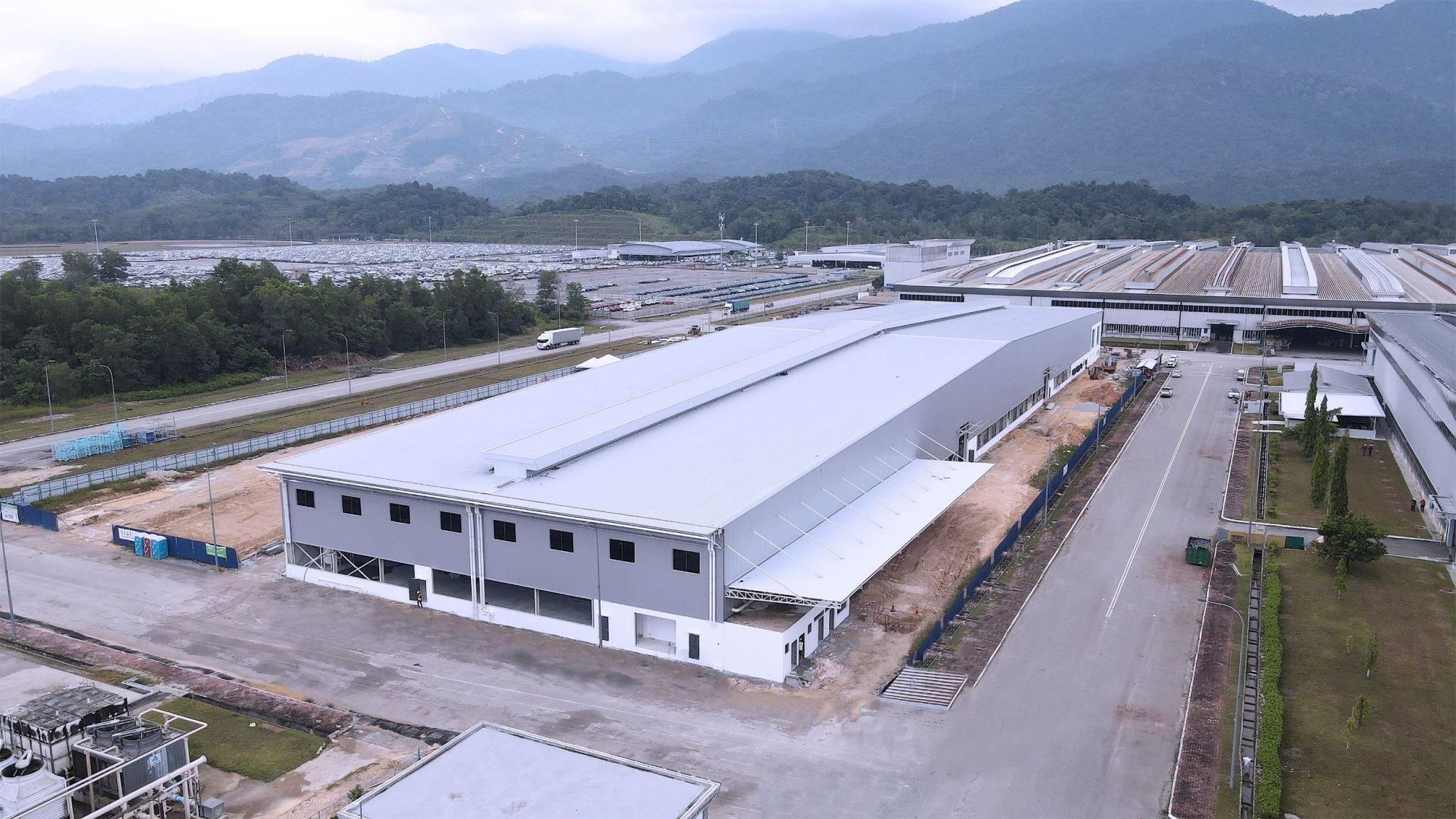
Industrial steel structures, including factories, warehouses, and manufacturing plants, use portal frame construction to achieve wide, column-free spans of 25 to 50 metres or more. The frame must be designed to carry crane rail loads, mezzanine floors, and future expansion loads in addition to standard roof and wind loads.
High-Rise Commercial Frames
Multi-storey office buildings and commercial developments use composite steel frames with concrete floor slabs. Steel's high strength-to-weight ratio reduces column and foundation sizes, and fast floor-by-floor erection compresses the construction programme relative to concrete-framed equivalents.
Bridges and Civil Infrastructure
Bridge steelwork requires tight dimensional tolerances, specific weld quality classifications, and surface protection systems designed for long-term atmospheric exposure. Fabrication for civil infrastructure typically involves independent third-party inspection at each fabrication stage.
Pre-Engineered Steel Buildings
Pre-engineered steel buildings use standardised frame configurations to deliver fast-track construction at competitive cost for warehouses and distribution centres. Components are fabricated to a fixed design in a controlled factory environment, reducing on-site assembly time significantly.
Power and Energy Structures
Power plants, substations, and oil and gas facilities require structural steel fabricated to elevated standards for load resistance, corrosion protection, and dimensional precision. These structures often incorporate galvanised or thermally sprayed zinc coatings in addition to standard paint systems.
The Structural Steel Fabrication Process
A complete steel structure fabrication sequence covers
- Structural design and shop drawing preparation
- CNC plasma or profile cutting of plates and sections to precise dimensions
- Assembly and tack welding
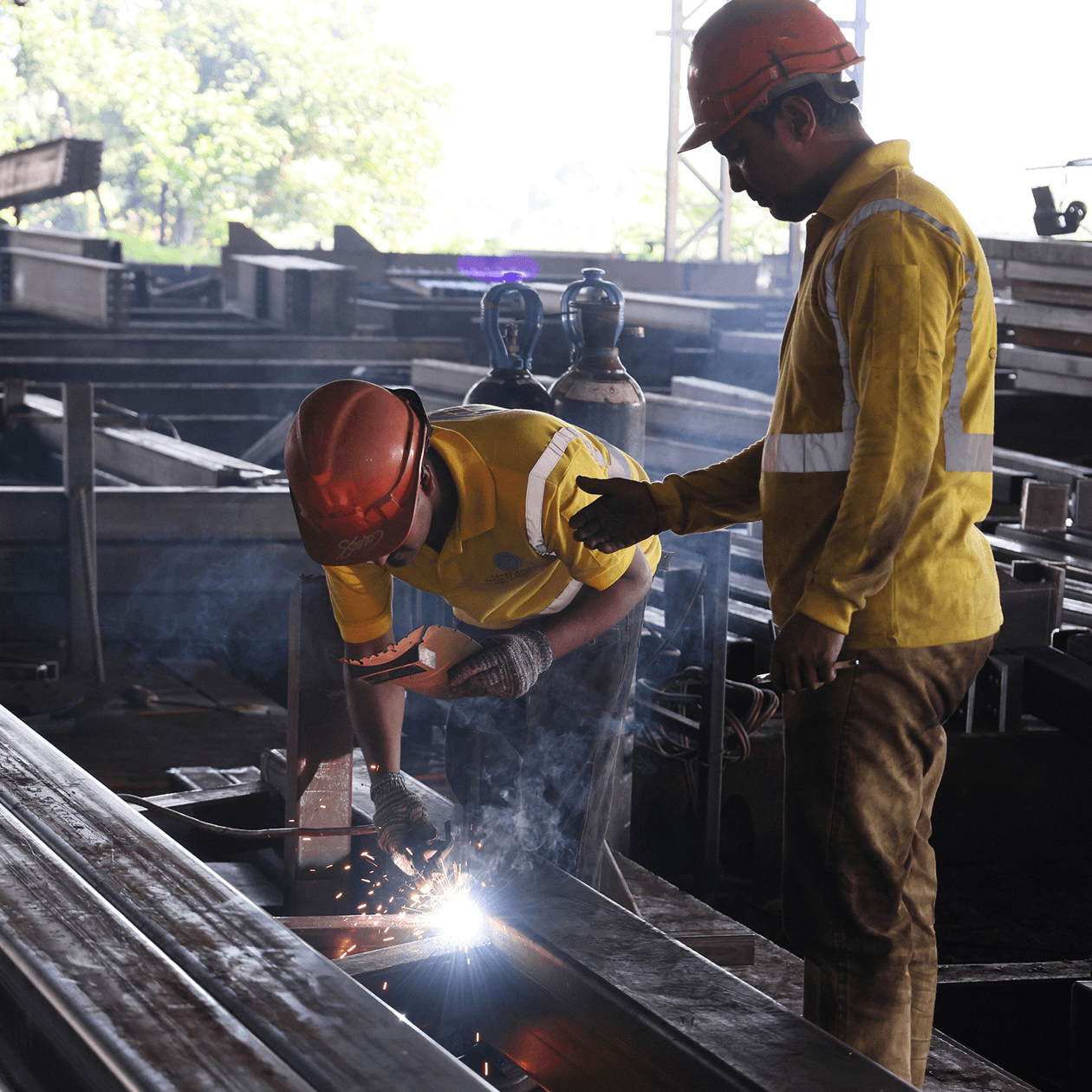
- Welding of structural joints, primarily by Flux-Cored Arc Welding (FCAW) used on primary structural joints where the process is appropriate
- Dimensional inspection, welding test (NDT)
- Sand blasting for surface preparation
- Painting to the specified coating system; and
- Transport and site erection.
Each stage produces inspectable outputs. A credible structural steel manufacturer maintains documented quality records across the full sequence, not only at final despatch.
Quality Assurance: What a Certified Steel Fabricator Should Demonstrate
ISO 9001 certification confirms that a fabricator operates a documented quality management system with defined processes from material procurement through to finished component despatch. UKAS accreditation confirms independent third-party evaluation of product testing and instrument calibration, providing assurance that measurements used in fabrication are accurate and traceable.
For structural steel, QC checkpoints should be embedded at each stage:
- Material verification against mill certificates on receipt
- Dimensional checks after cutting and assembly; weld inspection after welding; and
- Coating thickness verification before despatch.
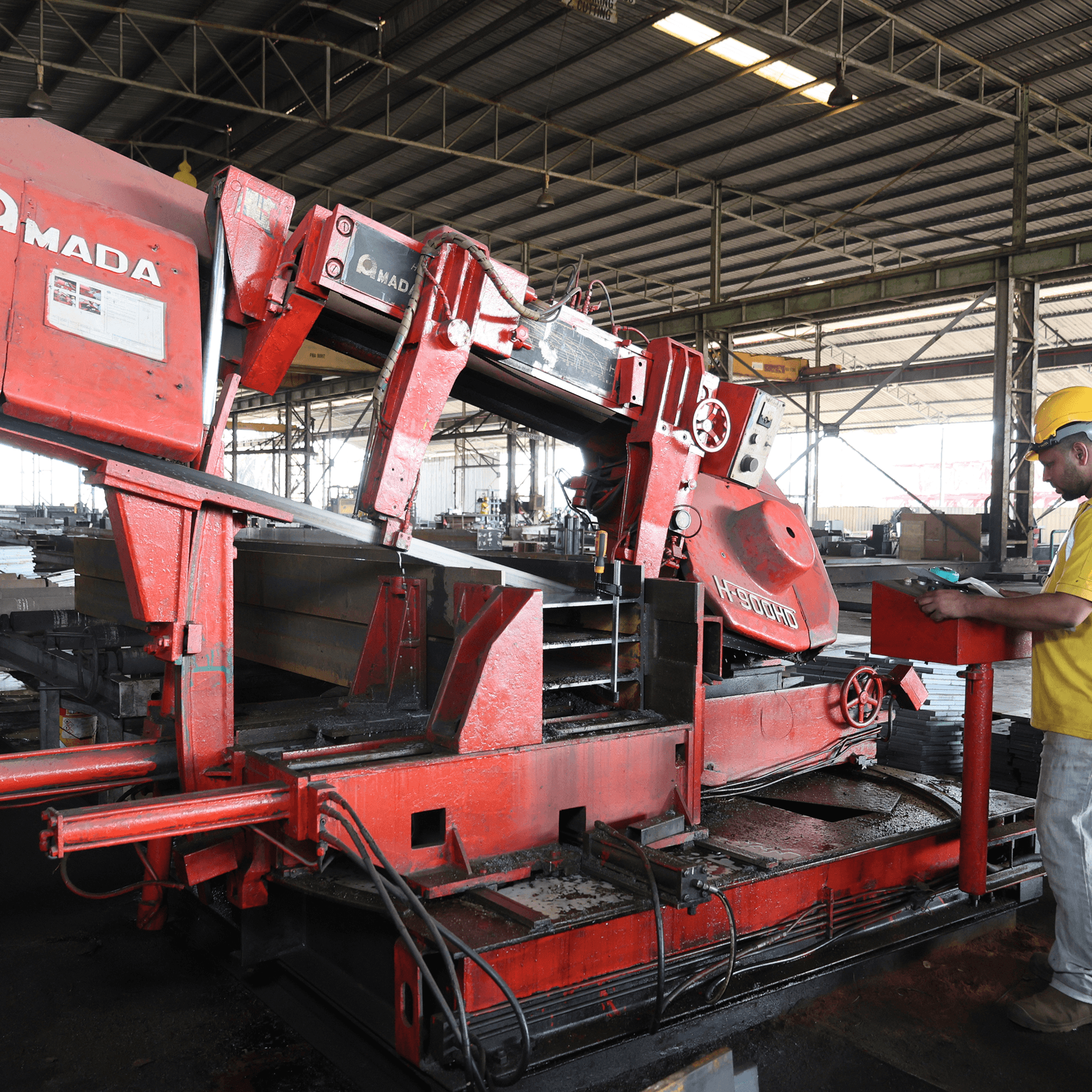
SANKI-Kigyo Sdn. Bhd. holds both ISO 9001 and UKAS certifications, with production equipment including CNC Profile Cutting Machines, Beam Assembly Machines, and Automatic Submerged Arc Welding Machines integrated into the production line
Why Steel Structure Is More Cost-Effective Than Concrete
Structural steel reduces construction cost relative to concrete through several factors working in combination. Lighter structural self-weight reduces foundation loads and therefore foundation cost. Off-site fabrication allows the steel structure to be produced while site groundworks proceed simultaneously, shortening the overall programme without compressing individual activities. Steel frames require no formwork, curing time, or wet trades on-site, reducing labour requirements and exposure to weather-related delays.
Pre-engineered and built-up steel beam systems further optimise material cost when designed to exact project load requirements. SANKI-Kigyo's Metal Builders division uses computer-designed tapered section beams that use material only where the structure demands it, achieving savings of up to 40% versus conventional hot-rolled sections.
How to Choose a Structural Steel Supplier in Malaysia
When shortlisting structural steel suppliers in Malaysia, apply these criteria before awarding any contract.
- CIDB registration. Confirm the supplier holds a current CIDB registration with a grade and category covering structural steel fabrication and erection for the scope of works tendered. Do not award a steel structure contract to an unregistered contractor.
- ISO 9001 and UKAS certification. These confirm process consistency and independent inspection capability. A supplier who cannot produce current certificates for both is relying on self-declared quality.
- Annual production capacity. A steel structure manufacturer running at full order book creates a schedule risk from the moment of award. Ask for current forward load against available capacity before signing a contract.
- In-house design and erection capability. Suppliers who outsource design or erection introduce coordination gaps and unclear accountability for dimensional errors and programme delays.
- Track record at comparable scale. Request references for completed steel structure projects in the same sector at comparable tonnage, with contact details for the main contractor or end client.
Plan Your Structural Steel Project with SANKI-Kigyo
Looking for a trusted structural steel supplier in Malaysia? SANKI-Kigyo has been delivering quality steel structures since 1974, with a track record across landmark infrastructure and industrial projects including Kuala Lumpur International Airport (KLIA). Our team handles structural design, fabrication, and erection under one integrated scope, from a 10,604 m² steel structure factory in Batu Arang, Selangor, with 10,000 tonnes of annual production capacity.
Contact us to discuss your structural steel requirements and receive a project-specific quotation.
FAQs About Steel Structure Malaysia
What grades of structural steel are available in Malaysia?
Structural steel used in Malaysia is commonly supplied to British and European Standards (BS EN 10025), with S275 and S355 the grades most frequently specified for general and high-load structural work. Malaysian Standard (MS) specifications for structural steel reference these BS/EN benchmarks.
Depending on the project specification, steel to ASTM standards (such as A36, A572 Grade 50, and A588 Grade A) or JIS standards (such as SS400 and SM490) may also be supplied, particularly for projects specified to American or Japanese design standards respectively.
The grades available from a specific steel structure supplier depend on their stock profiles and material procurement supply chain.
Do I need a CIDB-registered contractor for structural steel work in Malaysia?
Yes. Under the Construction Industry Development Board Act 1994, contractors carrying out construction work in Malaysia are required to hold a current CIDB registration with a grade and category appropriate to the scope of works. For structural steel fabrication and erection, verify that your contractor's CIDB registration specifically covers this scope before awarding a contract.
How long does structural steel fabrication take?
Fabrication lead time depends on the tonnage, connection complexity, and the steel structure manufacturer's current production load. As a general guide, straightforward industrial steel structures typically require several weeks from approved shop drawings, with larger or more complex structures requiring proportionally longer programmes. Confirm the fabrication timeline with your supplier at the tender stage, not after contract award.